These metrics provide a broad view of the total email activity within the system:
Emails Sent
This represents the total number of emails dispatched from the organization's mailboxes. A high volume of sent emails could indicate active communication, marketing campaigns, or large-scale outreach efforts.
Emails Received
The number of emails received across all mailboxes. This includes responses, incoming requests, notifications, and newsletters. Tracking received emails helps in understanding external communication patterns.
Emails Bounced
Bounce rates measure how many emails failed to reach their destination due to invalid addresses, full inboxes, or server errors.
Bounces are classified into:
Hard Bounces (Permanent failure) – Occurs when an email address is invalid or no longer exists.
Soft Bounces (Temporary failure) – Happens due to issues like full inboxes or temporary server problems.

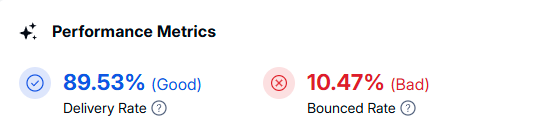
Performance metrics are key indicators of how well emails are delivered and received.
✅ Delivery Rate:
The percentage of successfully delivered emails. A high delivery rate suggests reliable email infrastructure and a well-maintained contact list.
⚠ Bounced Rate:
This is the proportion of emails that failed to be delivered. A rate above 5% may indicate outdated or invalid recipient addresses, impacting sender reputation.
Regularly clean up email lists to remove invalid addresses.
Use email verification tools before launching large campaigns.
Ensure proper domain authentication (DKIM, SPF, and DMARC) to boost credibility.
Engagement metrics track recipient interactions with emails and shows in a graphical representation.

Optimized Communication—Ensure emails reach the intended audience.
Spam Prevention—High bounce rates may cause emails to be flagged as spam.
Better Engagement—Analyzing trends helps in refining marketing and business strategies.
